Holly destroys her apartment after Fred's death
Breakfast at Tiffany'sHolly destroys her apartment after Fred's death is the physical crisis that follows the news of her brother's death. The telegram from Tulip, Texas confirms that Fred has been killed overseas; Holly's subsequent account reveals how the news became an image of death that she could not bear, and why the apartment was left in ruins.
The telegram and the immediate aftermath
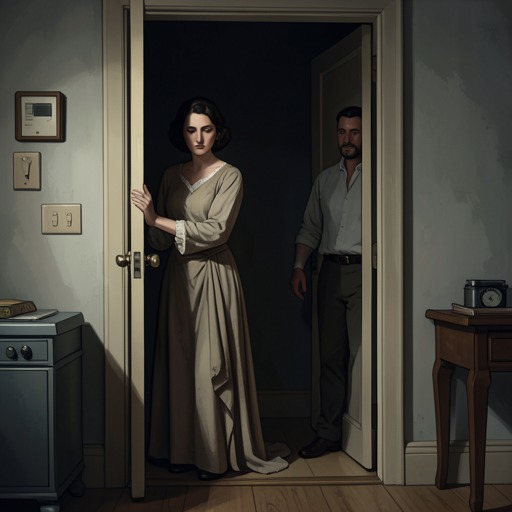
Before the loss is explained, the narrator encounters the destruction as an alarming disturbance. Madame Sapphia Spanella calls for help, saying that someone is being killed, while the sounds from Holly's apartment suggest a violent upheaval. When the narrator tries to get in, the racket stops, but the door remains closed. José Ybarra-Jaegar arrives with a doctor and opens it with his own key.
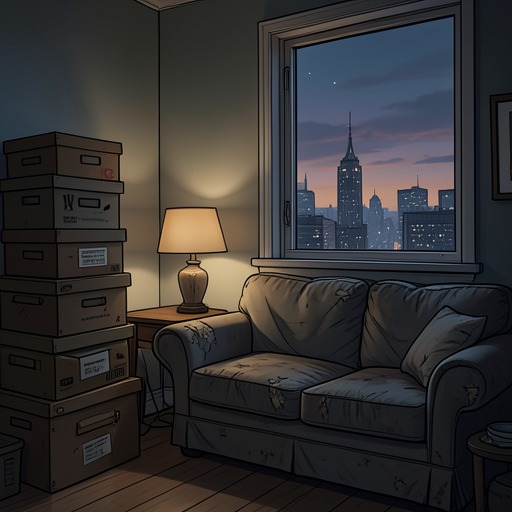
Inside, the Christmas tree has been dismantled, its dry branches scattered among torn books, broken lamps, and phonograph records. The icebox has been emptied, leaving food tossed around the room; Holly's cat remains there amid the wreckage. The disorder reaches the bedroom, where Holly's dark glasses lie broken on the floor. These concrete signs establish the scale of the destruction before anyone gives its cause.
The narrator later shows Holly a newspaper headline about Rusty Trawler. José dismisses the news that Rusty has married Mag Wildwood: he says that he and Holly had wanted the couple to run away and had laughed at the idea that their marriage would break their hearts. But his attention shifts to a yellow ball of paper among the litter. It is a telegram from Tulip, Texas, reporting that Fred has been killed in action overseas and conveying the sorrow of his husband and children. The telegram transforms the apparent domestic commotion into a response to bereavement.
Holly's account of the breakdown
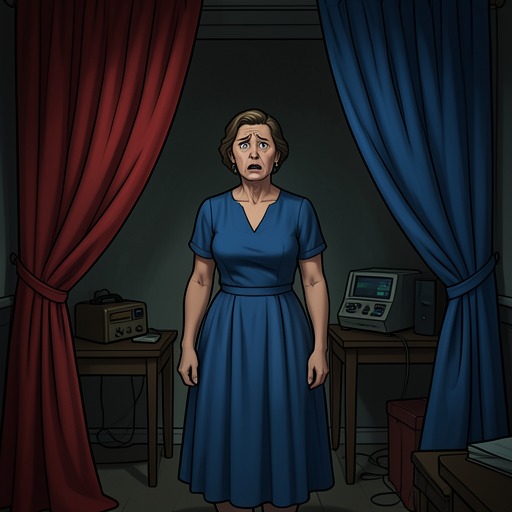
Holly later tells the narrator that she had not known about the woman in her vision until her brother died. As she wondered where Fred had gone and what his death meant, she says, she saw him in a room, cradled in the arms of a cruel figure who rocked him and laughed. Holly understands this apparition as a mocking image of what awaits everyone. She directly connects the vision to the wrecked apartment, asking whether the narrator now understands why she went crazy and broke everything.
Her account gives the destruction a particular emotional logic without making the room's damage merely symbolic. The broken objects are the record of an immediate, uncontrolled response; the later telling identifies the thought at its center. Fred's death has made mortality newly present to Holly, and the imagined scene of her brother in death's embrace turns that knowledge into something she experiences as intolerable.
Care, sleep, and the scene's consequences
When the narrator enters the apartment with José and the doctor, Holly is lying rigidly on the bed and appears unable to focus on the people around her. The doctor checks her pulse and tries to settle her, repeating that she is tired and should sleep. Holly repeats the word and speaks of someone who would let her sleep and let her embrace him on cold nights; she also mentions a place in Mexico with horses by the sea. The doctor echoes that image as he prepares to give her an injection. The scene moves from the wreckage to an effort to quiet Holly, while leaving the full meaning of her words to the reader.
Afterward, Holly never again speaks of Fred except once, and she stops calling the narrator Fred. For months she withdraws: her hair darkens, she gains weight, and she becomes careless about her clothes. She is often alone, although she seems more content than before and turns to homemaking. The contrast matters: the breakdown is not presented as a sudden resolution of grief, but as a violent rupture followed by a changed, quieter period of life.
Significance
The episode joins the telegram's plain, factual announcement to Holly's intensely personal vision of death. Its narrative order is revealing: the reader first sees the destruction, then learns the fact that caused it, and finally hears Holly describe the apparition that made the loss unbearable. The physical wreckage therefore functions both as consequence and as evidence, while her later explanation gives the earlier scene its emotional meaning.
The collapse also alters Holly's outward behavior and the narrator's relationship to her. Her brother's death becomes a silence she largely keeps, even as the aftermath changes her habits and domestic life. The episode stands as a decisive interruption: the restless, outward-facing Holly is confronted with a loss she cannot turn into movement or escape, and the destruction of her apartment marks the moment when that grief becomes visible.